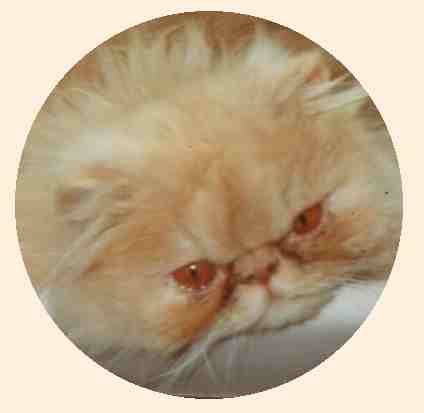
HARPSIE'S WEBSITE -

HOME OF THE

WALKING VETERINARY ENCYCLOPAEDIA

 

TRAVEL


Home


Contact Us


Introduction


How I Met My Family and Got My Name


My Personality


My Siblings


Medical Problems


Arthritis and Acupuncture


Asthma


Cancer


Cat Flu  - Feline Herpes and

Feline Calici Virus


Colitis


Constipation


Dental Problems


Epilepsy


Feline Lower Urinary Tract Disease (FLUTD)


Food Allergies


"Gunky" Ears and Ear Infections


Inflammatory

Bowel Disease


Kidney Infections


Polycystic Kidney Disease (PKD)


Skin Problems


Sunburn


Torn Trachea


Undescended Testicle


My Near Misses


Hypertrophic Cardiomyopathy


Meningioma

(Brain Tumour)


Pancreatitis


Behavioural and Lifestyle Issues


Feline Introductions


Inappropriate Elimination


Indoor/Outdoor Cats


Travel


Trains Cars Subway


Aircraft
Flying from the UK to the USA Flying from the USA to the UK Travelling in the Hold


British Airways Save Harpsie!


Introduction

Harpsie is a well-travelled boy, He's travelled by all the means of transport mentioned above, plus he often walks (i.e. he's wheeled along in his chariot) to the vet. So it's lucky that Harpsie copes well with all forms of travel - in the photo left we are in Starbucks. (We didn't normally sit down in Starbucks though, I would just occasionally stop off to collect a coffee to go on my way back from the vet's; and Harpsie doesn't look his usual happy self because this was not long before his cancer was diagnosed  - I would never have taken him there if I had realised). In fact, often after a trip we leave Harpsie's carrying basket out because he likes to lie in it, but if your cat gets stressed, you may wish to try flower essences or Feliway to help calm him/her.


The American Veterinary Medical Association has some tips on travelling with your cat.

Feline Advisory Bureau has information about travelling with your cat.


Trains

The day we first collected Harpsie, we travelled back home with him in his carrying basket on a train. He seemed to do fine with it, and purred the whole time; of course, back then we were rather ignorant of feline behaviour and did not realise that cats may purr when they are under stress or to comfort themselves, not only when they are happy. Still, Harpsie survived it, and judging by the way he's coped with other modes of transport, I think he did not find it as stressful as most cats would.


Cars

For Harpsie, as for most cats, the car usually means trips to the vet! As a British cat, for Harpsie it also means trips to the cattery, where Harpsie spends his time when we go on holiday. UK catteries, by the way, are not cages! We use a cattery approved by the Feline Advisory Bureau and it is very nice. The cats have a little heated house, with an outdoor run, and they can see the duck pond - they love watching the ducks.


Most of Harpsie's car trips are short ones, no longer than 20 minutes as a rule. However, when visiting the UK cardiologist, we travel for around two hours each way. I was worried how Harpsie would cope with these longer journeys, but in fact he copes fine, he simply goes to sleep. We do carry a litter tray, food and water with us, just in case, but he's never needed any of them.


Cats International has some tips on travelling by car.

Pets on the Go has information on hotels and motels in the USA which permit pets.

Cats International has information on staying in motels.


Subway

Harpsie goes to acupuncture once every two weeks for his arthritis. We decided to see how he coped with the subway, since taxis each way were becoming very expensive. Being Harpsie, he copes just fine, although I do cover his ears when trains pass through the station while we are waiting on the platform. He meets admirers on most of his trips, whom he usually ignores, but he does at least brighten their commute. He usually travels in his Pet Wheelaway, and every single trip we take, at least one person asks where we bought it - here is a photo of one (ours is black). I also use this for the cats when I walk to the vet's.


Air Travel

This was probably Harpsie's biggest adventure. In April 2004, he flew from England to the USA to become an Englishman in New York. We were moving there because of my husband's job. Our main worry was how to get the cats there safely - they are family, and where we go, they go. So, once they had got their Pet Passports, which would allow them to re-enter the UK without having to go through six months quarantine, the issue became one of how to transport them there safely, with the least trauma for them all.


On most internal flights within the USA, and many international flights from the USA, taking cats in the cabin with you is permitted. However, on flights into the UK all animals must travel in the hold because of UK quarantine laws. Therefore, for the sake of administrative simplicity, most airlines operating UK flights only allow animals in the hold whether they are flying into or out of the UK.


I searched desperately for a solution to this problem. And I found it in the form of wonderful United Airlines, to which I shall remain eternally grateful. Like all airlines, they are not allowed to permit animals to travel in the cabin when entering the UK; but they do permit it when leaving the UK.


Flying From the UK to the USA

This process was actually easier than we expected in the end, but it does take some planning. Here are a few important points to bear in mind:

  • We flew with United Airlines. I am not aware of any other airlines which allow you to take your cat in the cabin when flying from the UK to the USA.

  • Airlines which permit animals to travel in the cabin restrict the number of animals who are allowed on each flight (it is often a maximum of three animals per flight), so it is very important to make your booking as much in advance as possible, and to re-confirm it shortly before your travel date.

  • You are only allowed to take one animal per person on board, so since we have three cats, Karma did have to travel in the hold (she drew the short straw since she has flown in the hold before - see My Siblings - and we knew she could cope with it).

  • The airline can advise you about the size of the carriers you are permitted to use. Do not try to get away with a bigger carrier than they advise, because if your cat's carrier will not fit under the seat in front of you, s/he will be forced to travel in the hold. Karma had to have a rigid carrier for travel in the hold, but we used soft-sided Sherpa Pet Carriers to take Harpsie and Indie on board with us. These are available from Petco in the USA. We bought ours from Pet Planet in UK, they have a choice of sizes but the medium size worked fine for 10 lb (4.5kg) Harpsie, and met United Airlines' requirements for cabin travel.  

  • We paid £54 per cat in 2004 (around US$90 at the time).

  • You need to see your vet within 24 hours of departure to obtain a certificate of fitness to travel. This is both for the airline, and to show to US Customs when you arrive in the USA.

  • Do not give your cat a sedative before flying. It is potentially extremely dangerous, because it may make it harder for the cat to regulate his/her core body temperature at high altitude. The American Veterinary Medical Association advises against the use of sedatives for air travel. Our cats managed just fine without sedation. 

  • Before we checked the cats in, I took them into a disabled toilet at the airport and offered them food, water and litter, but none of them was interested. I did put Catpaper in the cats' baskets for the flight.

  • We checked the cats in when we checked ourselves in i.e. we did not have to go to a special check-in desk or terminal. We watched Karma have her security check, since she was going in the hold. She was then whisked away from us and kept in a secure area until she could be placed on the aircraft.  Harpsie and Indie were taken away from us to have their security checks, whilst we went through the usual security checks separately. They were then waiting for us (with a guardian) at the gate where we were to board the aircraft.

  • The flight was completely uneventful from a feline perspective. All the cats coped far better with it than we expected - I think Harpsie and Indie were reassured by our presence. They did have to remain in their carriers for the entire duration of the flight, but they could see us. 

  • After landing at JFK, they were paging us to come and collect Karma before we'd even got through passport control! Somebody was waiting with her until we reached her (and no, they don't put them on the luggage carousel!). We declared the cats, but there were no problems at all about them entering the USA, it took seconds.

  • United Airlines took wonderful care of the cats, and were really kind and gentle towards them. I cannot praise them highly enough.

Flying from the USA to the UK

Unfortunately, returning to the UK from the USA is not going to be half as easy. The UK Pet Travel Scheme, administered by Department for Environment, Food and Rural Affairs (Defra), does now apply to the USA, so our cats will not have to go into quarantine for six months. However, they will need to travel from the USA to the UK in the hold of the plane (this is non-negotiable, it is UK law), and will have to meet all the requirements of the scheme before they will be permitted to  enter the UK. If they fail to meet the requirements, they will have to enter quarantine.


Below are the steps you need to take that I am aware of in order to take your cat into the UK without him/her having to go into quarantine. Personally I do not find the Defra website very user friendly for people travelling from the USA to the UK, which is why I have tried to explain things more simply here, but I cannot emphasise this enough, do not rely on the information here, because it may no longer be accurate by the time you read it. The law seems to change frequently so be sure to check at the Defra website for current requirements. 


Defra provides an overview of the Pet Travel Scheme, together with a checklist. Be sure to refer to this every step of the way. And do please click on the links in the steps below because many of the requirements are very precise and must be followed to the letter.


Initial Preparations

  1. Your cat needs to be microchipped.

  2. Your cat needs to be given a rabies shot or series of shots after the microchipping has been done. Your vet will advise you on the correct number of shots required for the type of rabies vaccine which s/he is using on your cat. Make sure the vaccine is acceptable to Defra.

  3. You need to have blood taken and sent away to check that your cat has a sufficient level of protection against rabies. Currently this can only be done by one particular laboratory in the USA, the Kansas State Veterinary Diagnostic Laboratory. Blood tests performed by any other laboratory will not be accepted.

  4. Assuming that the blood test shows a satisfactory level of protection against rabies, your cat is still not allowed to enter the UK until six months from the date that the blood was taken (note: not from the date the rabies shots were given).

  5. This process is going to take you around eight months altogether.

  6. See the Defra website for a summary of the procedure.

Getting Ready to Travel

  1. If you are travelling from USA to UK, your cat is not eligible for a Pet Passport, but instead needs an Official Third Country Veterinary Certificate completed before you travel. This form is headed “Veterinary certificate for domestic dogs, cats and ferrets entering the European Community for non-commercial movements (Regulation (EC) No 998/2003)”. There is an example of this form here (it is the last two pages of this document).

  2. This form has to be an original (so no printing it from the internet), and has to be completed by a government approved vet. My vet is not a government approved vet, but fortunately he employs someone who is. To find a vet who can help in your state, check with the US Department of Agriculture Animal and Plant Health Inspection Service.

  3. You can have this form completed up to four months before you travel, but it is only valid up to the date on the certificate or four months after it is completed, whichever is earlier, so check to see when it expires.

  4. Most airlines require that your vet issues a fitness to travel certificate within 30 days of departure if your cat is travelling in the cabin, or within 10 days of departure if your cat is travelling in the hold. Check with the airline you are using to ascertain their particular requirements.

  5. Your cat has to be given a treatment against ticks and tapeworms which contains praziquantel 24-48 hours before you travel. However, this is a little tricky: you cannot enter the UK until 24 hours after the treatment has been given, but you cannot enter more than 48 hours after it has been given. Thus you basically have a window of around 24 hours to get your cat into the UK. Any vet can give this treatment, it does not have to be a government approved vet, but details of the treatment must be entered on the Third Party Veterinary Certificate. Make sure your vet uses the 24 hour clock, which is not commonly used in the USA (e.g. 3 p.m. is 15.00 hours).

  6. If your cat is travelling in the hold, as will be the case unless you consider entering the UK via another European country (see below), you need to use an approved transport company on an authorised route.

  7. You will need to ensure that your cat's paperwork, i.e. evidence of rabies shots, rabies bloodtest, the Official Third Country Veterinary Certificate are all available to be checked before your cat leaves the USA and when s/he arrives in the UK.

  8. One critical aspect of entering the UK under the Pet Passport Scheme is that your cat's microchip needs to be ISO standard and readable. Unfortunately, US microchip readers cannot read many European chips, and vice versa.  We had our cats microchipped in the UK, but when we had their chips checked by our US vet, he could not detect them at all. So if you have had your cat microchipped in the USA, I would recommend that you obtain a microchip reader to take with you when you travel to the UK - your vet should be able to tell you where you can get one. We were able to buy a chip reader which could read our European chip from Crystal Tag in the USA, who sold me the Mini Max II pocket reader, and who provided fast, efficient and helpful service.

  9. You will need to complete customs formalities. Your transport company should be able to arrange this for you.

  10. Defra provides an overview of the process, together with a checklist. Be sure to refer to this every step of the way.

Entering the UK via France


I am currently looking into the possibility of flying with the cats from USA to France, then entering the UK via Calais. By doing this, I would be able to take the cats in the cabin on the transatlantic part of our journey.


You have to find transport from Charles de Gaulle airport in Paris to Calais. We are planning to take a train from Charles de Gaulle airport (Terminal 2) to Lille, where we can change onto a train to Calais. The journey including connection time at Lille takes about 1.75 - 2 hours. 


The cat has to receive the anti-parasite shot in the last country visited before entering the UK, so this requires that you stay in France for a day or so in order to complete the requirements relating to that. A number of hotels in Calais permit pets.


You also have to find a way to get across the Channel. You can take cats on the Shuttle (the car transport train which uses the Channel Tunnel) or on certain cross-Channel ferries, but unfortunately you cannot take them on Eurostar (the passenger train which uses the Channel Tunnel). At the moment we are considering getting a P&O ferry as foot passengers, although the cats are kept away from you during the ferry crossing for some reason.


It is a bit of a logistical nightmare but it is doable - I have heard from one lady who managed this successfully. I am determined to try to return home this way. Once we have returned to the UK ourselves using this method, which I expect to happen sometime in 2008 or 2009, I will add details of our experiences.


If Your Cat Has to Travel in the Hold

Unfortunately sometimes this is unavoidable. Karma has flown in the hold three times with no problems, but it is riskier, so if at all possible I recommend taking your cat in the cabin with you, or at the very least travelling on the same flight as your cat if s/he does have to travel in the hold.


People often worry about their cats getting hit by moving suitcases, but all reputable airlines have a separate pet cargo area in the hold. You need rigid carrying baskets, which will be restrained by special belts in the pet cargo area so they can't move about during the flight and injure the cats inside.


These pet holds are temperature controlled (the animals would die of cold at high altitude otherwise), but most airlines refuse to carry animals in the hold during the summer months and sometimes during very cold weather - these rules are for when the plane is on the ground.


Whenever I have travelled with a pet in the hold, I have asked the flight attendant to remind the captain there are cats in the hold and have asked them to confirm the temperature controls in the pet cargo area are on. They have always been happy to do this.


Petflight is a US site which summarises the policies of various American airlines for internal flights.

Squidoo offers a similar service.

Cats International has some tips on travelling by plane.

Feline CRF Hints gives tips on travelling with a cat with chronic renal failure, though many of the tips apply to all cats.


British Airways Save Harpsie's Life!

We were planning to go home for Christmas in 2005, until my petsitter called to say she could not petsit because of the transit strike that had just started in New York. I managed to find another petsitter via my vet, who actually lives very close to me. Harpsie took a real shine to her. I was still struggling to find a way to get to the airport, but finally managed to book a cab about twelve hours before departure at three times the normal cost.


Although the strike had been called off a few hours earlier, we still had to leave really early that morning because everything was not yet back to normal, and we didn't know how bad the roads would be and how long the journey would take. I am most definitely not a morning person, but I dragged myself out of bed in the pitch dark, three hours earlier than usual, and gave the cats several cuddles each before heading out.


Ten minutes after take-off, my brain awoke - and I realised I had given Harpsie several cuddles but not his phenobarb for his epilepsy! I was beside myself with worry. Missing just one dose could cause a seizure and possibly death. I was horrified at the thought of Harpsie lying there helpless for twelve hours until the petsitter came in that evening.


The plane did not have phones, so I asked the flight attendant, Asha, if there was any way she could help. Good old British Airways! She told the pilot, who told air traffic control, who told ground staff, who called the petsitter, who went and gave Harpsie his meds! The petsitter then called ground staff, who called air traffic control, who told the pilot, who told the flight attendant, who gave me the good news.


I am of course deeply embarrassed and ashamed that I had to add to the workload of these people on what was already a very busy day for them. But I am also incredibly touched that so many strangers, and our wonderful  petsitter, went out of their way to help a little blond pussy cat.


Harpsie did write a thank you letter to BA, and was delighted to receive a response addressed to Harpsie (Head Cat). Clearly he is now famous in aviation circles too.


          Back    Home     


This page last updated: 10 March 2008


Links on this page last checked: 14 February 2008


Copyright © Harpsie's Site 2005-2008. All rights reserved.