|
|
HARPSIE'S WEBSITE - HOME OF THE
WALKING VETERINARY ENCYCLOPAEDIA

INAPPROPRIATE ELIMINATION
|
|||||||||||||||||||||||||||||||||||||||||||||||||||||||||||
|
If your cat urinates or defecates inappropriately, the first thing to do is:
GO TO THE VET!
In many cases, inappropriate elimination has a medical cause, such as a urinary tract infection. If this is the case, and you don't address the underlying cause, your cat's behaviour will not improve, and s/he could be in severe pain.
Introduction
Causes of Inappropriate Elimination
Getting to Grips with the Problem
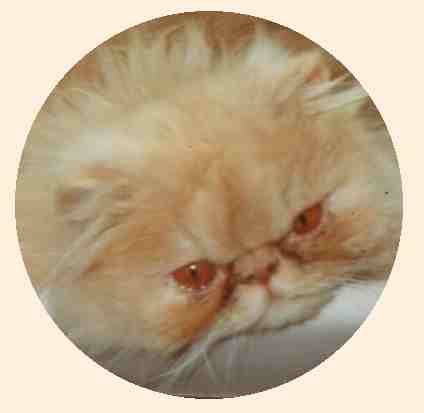
Yes, I know, I know. Tell me about it. Harpsie had an accident on a rented denim sofa a week before we were due to hand it back, and because it was denim, I had to pay somebody US$200 to come and clean it professionally. It's horrible to live with the stress of a piddling cat. The smell, the mess, the problem of cleaning it, especially if it's something like a bed, sofa or carpet; not to mention the hygiene issue.
The problem is, if you get mad or uptight, your cat will sense it. And contrary to what many people seem to think, cats do not exhibit inappropriate elimination out of spite, or anger. A piddling or pooping cat is either physically sick (in which case the vet should be able to help), or stressed and maybe feeling insecure (in which case if you are angry, the cat will pick up on that and feel even more stressed or insecure). Cats urinate because there is a problem with their toileting arrangements, or to comfort themselves in some way - perhaps to make themselves feel more at home in their surroundings by adding their own scent. If you can give your cat satisfactory toileting arrangements and help your cat feel secure, the problem should reduce or disappear.
So try not to shout at your
cat. By all means have a little chat asking if they feel OK, but don't shout
at them, or hit them. It is quite in order to give one firm
"NO!" if you catch your cat in MID-pee but
shouting after the event is pointless.
Oh, and please,
do NOT rub your cat's nose in the accident, it is extremely cruel and
achieves nothing, cats do not associate the punishment with their behaviour,
they will simply become even more stressed and possibly frightened of you. If you have a cat whom you cannot trust, help both of you by reducing temptation. For cats who urinate on beds or sofas, try limiting their access to such areas by closing doors, or if you are reluctant to do this, cover the bed or sofa with incontinence pads or a plastic sheet (see incontinence supplies), and put a machine-washable blanket on top for the cat to lie on; this will protect the area and so reduce your stress levels, whilst allowing the cat to lie on a comfortable but easily washed blanket. If you are in the USA, you could try using Catpaper rather than a plastic sheet: I have this on my sofas at home, underneath throws, and nobody even knows it is there.
I would recommend you also try cage training: because the cat is confined, you can go about your business knowing your cat is not urinating on your belongings.
I used this method with both Indie and Karma, two years apart. Ideally you want to use a cage, but it is also possible to use a small room such as a spare bathroom instead of a cage. You want a smallish space - the reasoning is that a cat will not soil his or her bed or food so s/he should use the tray because that is the only viable alternative in his location.
When we cage-trained Indie and later Karma, they were both out of the cage full-time within two weeks, but you need to go at your cat's pace - do not rush this. Indie has had no relapses since. Karma has relapsed occasionally but on most of these occasions she has either had a urinary tract infection or was severely constipated.
Medications (Pharmacological Treatments) Sometimes medications are advised for treating behavioural problems including inappropriate elimination. Since all medications have potential side effects, and few of them have ever been tested in cats, I would advise caution. In most cases, it is worth seeing a behaviourist to try to get to the root of the problem rather than simply accepting medications prescribed by a vet with limited experience of behavioural problems.
Of course, even behaviourists may sometimes advocate the use of medications; it depends on the cat and the nature of the problem. However, medications should only ever be used in conjunction with a behavioural modification programme; if medications are used in isolation, the chances of resolving the problem are much reduced.
Pharmacological treatment for behavioural problems (2005) Overall KL Presentation to the 30th World Congress of the World Small Animal Veterinary Association
Hilltop Animal Hospital has excellent information from Dr Karen Overall, a famous US animal behaviourist. Hilltop Animal Hospital also has a series of four other articles with advice on dealing with such problems. Association of Pet Behaviour Counsellors has a very helpful article by one of its members, David Appleby, which also covers spraying and middening. Feline Advisory Bureau covers spraying and soiling indoors. Feline Behaviour Guidelines from the American Association of Feline Practitioners has some information on normal feline elimination (page 15). The association between feline elimination and feline aggression disorders (2005) Overall KL Presentation to the 30th World Congress of the World Small Animal Veterinary Association discusses how intercat stress in the home may be a factor in the development of inappropriate elimination. The Behavior Clinic at Tufts Cummings School of Veterinary Medicine offers a consultation service via your vet using fax. It costs approximately US$112 (the exact price depends upon the complexity of the problem) and will provide you and your vet with a detailed treatment programme. They also offer a service which doesn't involve your vet called Petfax, but this is more expensive at US$206.
When we got Tanya, she was very clean and always used her litter tray. Therefore when Harpsie arrived and, as mentioned on the Feline Introductions page, began exhibiting inappropriate elimination, we were utterly mystified. In fact, until it happened to us, we had no idea that this problem could arise, let alone that it is actually relatively common.
Since Harpsie's first episode involved him peeing and pooping on the bed, initially we thought he had an upset stomach. We praised and comforted him, which was actually the best thing we could do. We had been away for the weekend, so the damage had been done some time earlier, and if we had wanted to punish Harpsie (which I do not advocate in cases of inappropriate elimination), he would never have associated the punishment with the inappropriate elimination because of the time gap. But also, he was exhibiting this behaviour because he was stressed (we had not introduced him to the household properly), so comforting and reassuring him was actually the best possible thing we could have done.
Even so, Harpsie's behaviour worsened initially, as his territory within the house expanded, and he earned himself the name "The Phantom Piddler". He peed on our bed several times, once, memorably while my husband was sleeping in it - he jerked awake to a cold, wet leg. Harpsie also took a real dislike to my knitting bag and the wool therein - I had to ditch it. And - worst of all for us Brits - he struck several times on the tea cosy! There's nothing like staggering down to make yourself a cup of tea at 6 a.m. before your long commute to work, only to end up with a hand soaked in cat pee.
With Harpsie, we had no plan at all. We knew little about feline behaviour, but we did know one thing: we loved Harpsie and he was not going anywhere. So we never shouted at him (though boy, did we beg), and we patiently cleaned up after him, and eventually, as he began to feel more secure in our home, the inappropriate elimination stopped.
Harpsie did go through one more phase of inappropriate elimination, not long after Thomas and George joined the household seven years later. I saw all three boys sitting close to each other on the stairs. This was unusual, so I went to investigate. There was a large fresh stool on the stairs, which George and Thomas were sniffing intently, whilst Harpsie sat there looking smug. Obviously he felt the need to let the other guys know who was boss, so he was middening.
Thereafter Harpsie never had any problems, apart from for medical reasons (when he developed kidney infections, these resulted in incontinence, which disappeared when the infections were brought under control).
Indie came to us as a rescue, aged almost two years. I wanted a companion for Harpsie, who was pining away after Tanya's death, and I had had a long talk with Cats Protection, during which I mentioned how Harpsie had had inappropriate elimination problems, but we had resolved them (via patience rather than an actual plan).
The very next day, Cats Protection asked if we could take Indie, who was an urgent case. And she was a real phantom piddler! Her current owner was a guy whose girlfriend had given Indie to him because she kept peeing in her home and her flatmate had complained. Now Indie was peeing in his home, and his flatmate had threatened to dump Indie (who had never been outdoors in her life) out on the street if she wasn't out of there by that evening.
I was underwhelmed at the thought of a piddling cat who was not yet two years old, so we had years of piddling ahead of us. But she needed us - who else was going to take her with her history?
Indie arrived that same night. While we were collecting her, the guy she lived with mentioned that she peed on sofas while lying next to you. This was all sounding better by the minute - not! I managed to track down her breeder and obtained further information about Indie. She had been fine until she went to her first home; but things definitely went downhill from there. In total she had had five homes before us because of her behaviour!
To say we were not optimistic would be an understatement. But we cage-trained Indie - you can read more about this method above. And I am pleased to say that Indie has now been with us for over seven years, and not once has she exhibited any inappropriate elimination. In fact, she is a very clean cat who spends ages covering up her litter box performances, and who has been known to cover up for the other cats too.
Karma, a blue Himalayan, was born in August 1997 in the USA. She was spayed and declawed at the age of 10 weeks, and immediately began exhibiting inappropriate elimination. Her owner dealt with this by promptly locking Karma in a bathroom for 18 months, where she had very little contact with others, apart from when food was delivered to her twice daily. Karma did not improve, so she was given up for adoption in Seattle.
Unfortunately circumstances changed (see My Siblings) in November 2000 when Karma was three, and Karma began to urinate inappropriately again.
Karma was placed in the bathroom, the only room without soft furnishings, her favourite peeing spot (unfortunately, the rest of the house was open-plan so there were not many options). This was very lonely and boring for Karma, and eventually her human decided she had to find her a new home.
Of course, nobody would take Karma - shelters said they couldn't rehome her because of her history, and she couldn't find anybody else. Karma was at risk of euthanasia so we eventually agreed to take her. She had to go into quarantine, which wasn't much fun, but unlike living in a bathroom it was at least temporary.
Karma came home to us in August 2001. She had been on medication for her problem (initially clomipramine, as prescribed by her American behaviourist, but unknown to us the quarantine vets had changed this to diazepam). We cagetrained Karma, and eventually we were able to wean her off all her medications.
Karma is pretty good overall - she coped superbly with moving from the UK to the USA in 2004, despite having a urinary tract infection at the time. Having said that, she is the least reliable of all our phantom piddlers. She occasionally urinated on beds and sofas in 2004 and 2005 but in all cases she had a urinary tract infection (or, on one occasion, constipation) and following appropriate treatment she became clean once again.
At Christmas 2005 and in March 2006, Karma peed on the sofa (once each time) whilst we were on vacation. We believe she felt stressed and bored because she only had limited company during this period. Whilst she's far from a cuddler, Karma does like company. Because of Harpsie's tendency towards incontinence caused by kidney infections, we always have Catpaper or puppy pads on the sofas, so fortunately this was not as stressful as it might have been.
Incidentally, Karma's behaviourist said Karma's
declawing played a major part in her behaviour. It's a disgusting practice
and should be illegal everywhere, as it is in most
Western countries apart from USA and Canada. As mentioned above, Tanya was the cleanest cat on the planet. However, she did exhibit inappropriate elimination after she was diagnosed with chronic renal failure (CRF). This is not that uncommon, and it is addressed here.
This page last updated: 11 February 2008
Links on this page last checked: 2 February 2008
Copyright © Harpsie's Site 2005-2008. All rights reserved.
|
|||||||||||||||||||||||||||||||||||||||||||||||||||||||||||