|
|
HARPSIE'S WEBSITE -
HOME OF THE
WALKING VETERINARY ENCYCLOPAEDIA

THE INDOOR/OUTDOOR DEBATE
|
||||||||||||||||||||||||||||||||||||||||||||||
|
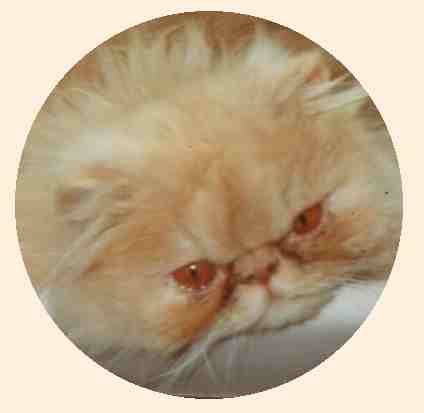
The indoor/outdoor debate is one of those contentious issues in feline circles which is not going to be resolved easily. I'm addressing it here because we've been on both sides of the debate, which has had a direct effect on Harpsie's lifestyle, so it seemed an appropriate topic for Harpsie's website.
I'm English, so my culture is that cats are allowed outdoors, and when we lived in the UK, we did allow our cats out. But in 2004 we moved to the USA, where the culture is the exact opposite, and our cats are indeed now indoor only (it's kind of hard not to be when you live on the 42nd floor).
I'm not entirely clear why there are such major cultural differences on this issue. I suspect it's partly because there are so many more risks for cats in the USA which can cause injury or even kill them. These include predators , such as coyotes, snakes, but also things like weather issues, such as hurricanes, extreme heat etc. (in England we just have rain).
It's also partly because of different legal perspectives. In the USA it is common to have leash laws or laws forbidding animals to go outside at all, and/or to restrict the number of animals one person may keep. Not only is this unknown in the UK, but in fact cats have the right to roam freely, and in law a catowner is not liable for any damage resulting from the cat's behaviour.
The cultural differences are so entrenched that they even stretch to the differing approaches of shelters in the USA and Europe. In the USA, you are likely to be turned down by a shelter if you admit you plan to allow your cat to go outdoors. However, in the UK in particular, you are likely to be turned down if you admit you plan to keep your cat indoors! However, Cats Protection does not rush to place cats in high traffic areas, and in these instances it will work with potential adopters to find a cat more suited to the indoor lifestyle, for example an older, blind or deaf cat.
Much of what follows is based on two essays I wrote in 2002 whilst a post-graduate student at the University of Southampton. The emphasis is on welfare considerations, and I had a restriction on word count, so I do not cover certain issues specifically, such as predators.
You will see that I basically take the same information and alter the emphasis to reinforce my arguments. The fact that it is relatively easy to do this illustrates why there is no clear cut solution to this debate.
I do have full references which I used to make available upon request but I no longer do so because people were simply plagiarising for their own essays rather than doing their own research.
Not Permitting Cats Outdoors Raises Welfare Concerns: Arguments in Favour Please see above for the basis on which this section was written. 1.0 Introduction
2.0 Behavioural Repertoire 2.1 Hunting
A cat with outdoor access will usually have a home range of about 100m² and a territory of 500m – 2km (Leyhausen 1981). Cats kept indoors will have only a tiny fraction of that range, and thus are unable to exhibit normal feline ranging behaviour. This can be particularly stressful for a cat who is kept indoors after previously being allowed out (Turner 1995). Indoor cats also live at an extremely and artificially high density. Liberg & Sandell (2000) observed densities in outdoor cats from 1 cat per km² to 2000 cats per km². They did find that in ferals, density may increase around an area with regular supplies; but the density was nowhere near that found in one study of indoor cats (Bernstein & Strack, 1996) where there were 113,000 cats per km², i.e. 50 times greater than the highest densities observed by Liberg and Sandell. This density could cause stress to cats since it is so unlike the density which they would experience in the wild. Keeping cats in a confined area is also contrary to natural feline behaviour patterns. Cats tend to "timeshare" their territories, and will take efforts to use the space at different times to other cats sharing the territory: this is not possible for indoor-only cats. In addition, feral cat groups tend to be matrilineal, so keeping male cats indoors in groups creates an artificial and potentially stressful environment. 2.3 Relationship Considerations
3.0 Health and Longevity
4.0 Conclusion
Not Permitting Cats Outdoors Raises Welfare Concerns: Arguments Against
Please see above for the basis on which this section was written.
1.0 Introduction
2.0 Behavioural Repertoire 2.1 Hunting
Although cats kept indoors may have a smaller range than an outdoor cat, it is still possible to provide an environment with complexity, choice and unpredictability (Holmes 1993). It is particularly important to provide 3-D and vertical space, which can greatly increase a cat’s range even in relatively small homes. Picture windows can also be provided, perhaps with a birdfeeder to watch outside. The cats in Bernstein & Strack’s 1988 study were kept at an extremely high density (113,000 cats per square km, 50 times greater than the highest densities observed by Liberg and Sandell (2000). Their home ranges were naturally much smaller than those of feral cats, but the cats appeared to adapt well. The neutered males had a bigger home range (4-5 rooms out of 10) than females (3-3.6) but overall there were no problems associated with this high density – the cats still timeshared favoured spots, just as they would do outdoors in order to reduce potential conflict. In one study (Heidenberger 1997), cats who were allowed to go out only seldom or in good weather had more problems than those who never went out at all: "the opportunity itself (yes/no) to go outside produced no significant results". Turner (1995) has stated that being kept indoors can be particularly stressful for a cat who was previously allowed out; however, if a cat is kept indoors as a kitten, s/he will know no different and will rarely have any problems in adapting (Heath 1994). 2.3 Relationship Considerations
3.0 Health and Longevity
Ah, those much quoted statistics! You know the ones I mean, where the pro-indoor brigade proclaim as absolute fact that indoor/outdoor cats only live an average of 2-3 years, whereas indoor cats live an average of 12 years. I see these statistics quoted all over the internet, yet nobody ever provides a source for them. And living most of my life in UK, I know for a fact that this oft-quoted statistic cannot be true of the average British cat.
As part of my essay-writing activities, I have done some research and I believe the original source may be Dr Karen Overall, who states in her 1997 book Clinical Behavioral Medicine for Small Animals (p258):
"cats that are 'outdoor' live an average of 3 years, whereas 'indoor' cats live an average of 12 years; the difference is largely related to mortality caused by cars".
She then cites two references. The first one is Patterns of trauma in urban dogs and cats: a study of 1000 cases (1974) Kolata RJ, Kraut NH, Johnston DE Journal of the American Veterinary Medical Association 164(5) pp499-502. I haven't been able to find the text of this, probably because it is so old. However, a later study by Kolata, Trauma in dogs and cats: an overview (1980) Kolata RJ Veterinary Clinics of North America Small Animal Practice 10(3) pp515-22 states that approximately 13% of patients seen in two large veterinary hospitals were there because they were injured. "Approximately 35% of dogs and cats were injured severely, with an overall mortality rate of about 9% from either spontaneous death or euthanasia. The major factor that influences an animal's chances of being injured is the owner's management of the animal's environment".
The second study cited by Dr Overall is Urban cats: characteristics and estimation of mortality due to motor vehicles (1986) Childs JE & Ross L American Journal of Veterinary Research 4(7) pp1643-8. This study found that "the number of dead cats annually removed from Baltimore streets averaged 2,721 over 3 years". Since not all cats who were killed were retrieved, the authors estimated that in fact over 5,000 free-ranging cats were killed by cars each year in Baltimore. "Analysis of 212 dead cats removed from city streets showed that the majority were male (63%) and that most animals were sexually intact (90%). At least 20% of the dead animals was previously owned, and few kittens or juvenile cats were found in the sample."
Since Dr Overall mentions that the cause of an early demise in outdoor cats is usually road traffic accidents, I was interested to see the results from this more recent British study. Clinical study of cats injured and killed in road traffic accidents in Cambridgeshire (2004) Rochlitz I Journal of Small Animal Practice 45 p390 is a study of 128 cats involved in road traffic accidents in Cambridgeshire, a county in England with a human population of over 552,000 people. In this study 12.5% (16) of the cats were dead on arrival, and the mortality rate for the remainder was 16% (21). Dr Rochlitz says: "Half of the cats were aged between seven months and two years, with more males than females affected. Most cats had moderate injuries; strays had more severe injuries than owned cats... Surgery was required in 51 cases. Most cats were hospitalised for between two and seven days and some required up to one month of treatment. The cost of treatment was less than £400 [around US$750] for 84% of cats."
This means that 28.5% of the cats in this study died; and 71.5% survived. According to the Pet Food Manufacturers Association, there were 9.2 million cats in the UK in 2003. In the Baltimore study, 90% of the animals were entire, with the majority being male. None of the above studies therefore convinces me that the oft-quoted statistics apply to UK cats, or even necessarily to the average American neutered family cat. I think the location where the cat is to be permitted outdoors is a major factor in longevity or otherwise of a cat permitted outdoors, as is the cat's sexual status (neutered animals are less likely to wander far). Safety It is a myth that indoor only cats are entirely safe. They are at risk from toxins, accidents, and fire. My cousin's cat was nearly killed by an arsonist who broke into her home and set several fires. Feline Advisory Bureau has information about products commonly found in the home which are poisonous for cats. Feline Advisory Bureau has information about poisonous plants.
Health Indoor cats are still at risk from disease if you decide to introduce a new cat to the family. Never expose your resident cats to a new cat until you have had the newcomer tested for FIV and FeLV by your vet. Assuming the tests are OK, you should still quarantine the new cat in order to make sure s/he is not bringing infectious diseases such as cat flu into the home.
Introducing a new cat properly to the family is even more critical with indoor cats, who have limited opportunities to escape from the accompanying stress. See Feline Introductions for more information on introducing a new cat.
Indoor cats are also at higher risk of developing FLUTD (feline lower urinary tract disease) than cats permitted access to the outdoors. It is thought that this is related to stress.
Environmental Enrichment Toys It is important to provide indoor only cats with stimulation. Try to provide plenty of toys, and vertical climbing space. It can help to rotate toys, so your cats don't get bored with them. Cat Dancer is Indie's favourite toy.
TV
Pet A-Vision sells videos and DVDs for cats - these are the ones I bought. Amazon sells one of these DVDs, Video Catnip.
Adapting The Environment The Cats House shows the ultimate in adapting your house to suit your cats' needs. Most people would not choose to go this far, but it is fascinating to see. The Indoor Cat Initiativv at Ohio State University College of Veterinary Medicine has some very helpful information about the needs of indoor cats and how to prevent problems. Feline Advisory Bureau has tips on creating a cat-friendly home.
Clicker Training Clicker training is another way to entertain indoor cats. I actually began this when my cats were indoor/outdoor, and Harpsie and Indie were both very taken with it. Karen Pryor is an acknowledged expert on clicker training. I highly recommend her book, Clicker Training for Cats, available from Amazon. Cat Clicker List is a support list where you can discuss your attempts at clicker training and get support and tips.
It is definitely worth taking steps to protect your indoor/outdoor cat as much as possible. Naturally your cat should be neutered. A collar is a good idea, and microchipping is highly recommended. I personally believe cats who go outside should be vaccinated, including against leukaemia.
Feline Advisory Bureau discusses the indoor/outdoor debate. Cats Protection discusses how to make your garden attractive to your cat so s/he is less likely to roam Feline Advisory Bureau talks about collar safety. Indoor Outdoor Cats List is a support list where you can discuss any issues you may have with others who also permit their cats to go outside.
Leash Training Some people have chosen to leash train their cats. This enables them to take their cats out into the fresh air whilst keeping them safe. We did not take Harpsie out for walks, but those who wish to do so might wish to check out Harpsie's chariot.
About discusses alternative ways of taking your cat outside. About has some information about walking harnesses and leashes. Kitty Walk Systems offers a variety of strollers.
Outdoor Safety Enclosures Another possible solution is to set up an enclosed area in your garden, so your cat can go outside but s/he is safe from predators. Here are some US suppliers:
The Feline Solarium has a build-out window so your cat can look around more easily. Cat Terrace offers a larger version. The Cat's Den offers an enclosed walkway for your cat. Feline Advisory Bureau has information on catproofing your garden and building your own enclosure. So, having tried both approaches, how do I view this debate? Well, I sit on the fence. When we lived in UK, I was never very good with the concept of free-ranging cats. If my cats were free-ranging I would be worried sick the entire time they were out. Fortunately this was rarely an issue for us. We have always made it a point to buy houses with fully enclosed gardens; and we've usually had Persians, who tend to be homeloving and who do not wander far. This has been an excellent compromise, because none of our Persians has ever left our garden (well, Tanya burrowed into the garden behind us once, and was so frightened she came straight back!). The cats certainly do not have a cat flap - they are only allowed outside when we are there to supervise.
My three cats who moved to the USA coped surprisingly well with switching to an indoors only lifestyle. I think it helps that we are so far up that they cannot see grass close by. It probably also helps that they were a bit more mature (seven and older) when we moved. So I do not think the indoor lifestyle is necessarily a bad thing, particularly if you focus on environmental enrichment.
Having said that, I am so looking forward to seeing my cats' faces when we return to England and they sniff the air as they step outside, and chase butterflies in summer and leaves in autumn, and shake their little paws in disgust when they step in snow. I think having controlled access to the outdoors really gives them the best of both worlds, whilst providing me with peace of mind regarding their wellbeing.
*****
This page last updated: 20 February 2008
Links on this page last checked: 2 February 2008
Copyright © Harpsie's Site 2005-2008. All rights reserved. | ||||||||||||||||||||||||||||||||||||||||||||||